Vixen of Viscera begins with a contradiction: make something beautiful out of something designed to be grotesque.
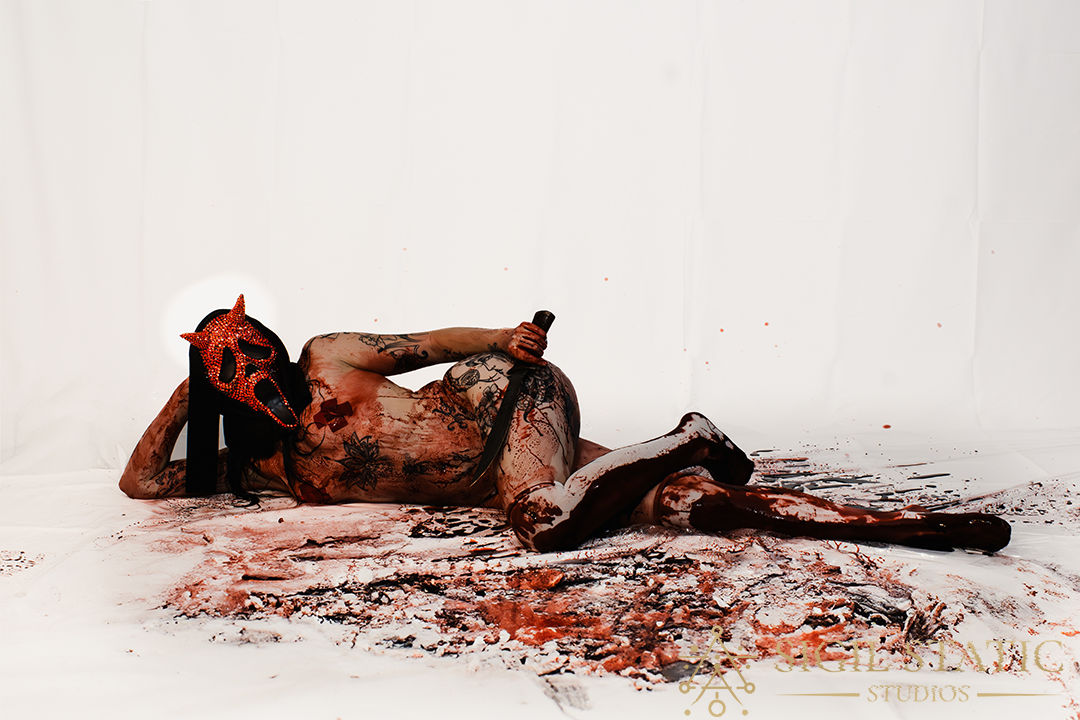
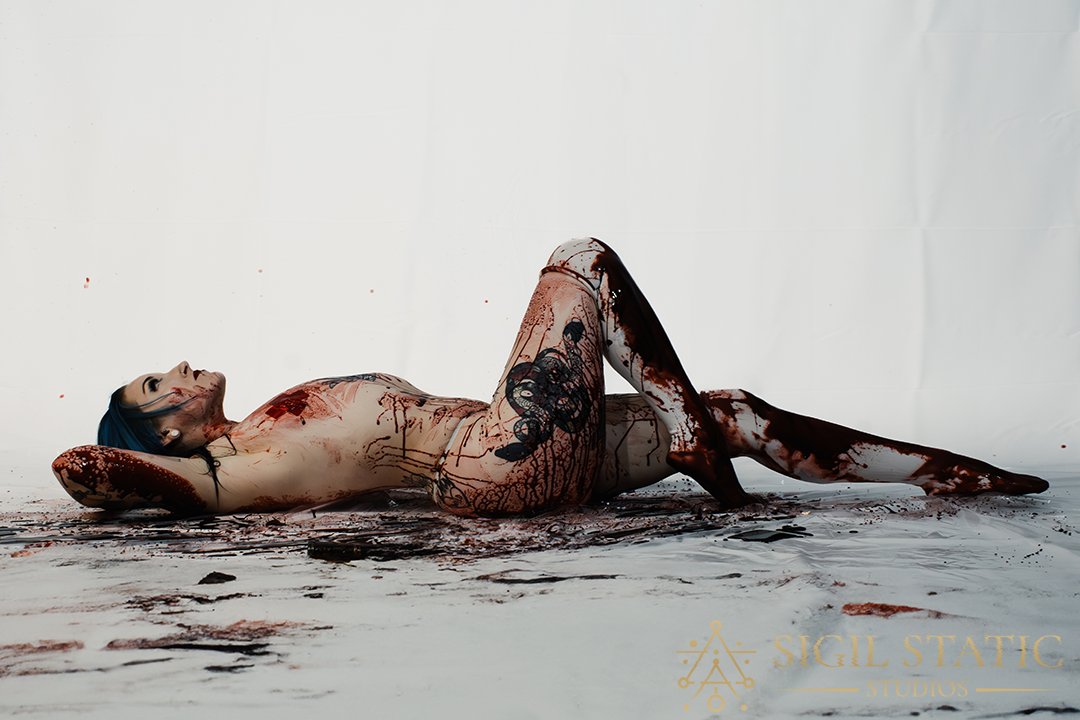
Against the sterile emptiness of an all-white room, Kyra becomes the only source of colour—and then proceeds to ruin the place.
Blood pools beneath her. A knife raises an obvious question the photographs have no intention of answering. Red spreads across skin and white surfaces until the pristine environment resembles the aftermath of a particularly stylish slasher film.
Then there’s the mask.
Ghostface belongs firmly to horror iconography, but rendered in red sequins it becomes something else: part killer, part fashion accessory and just ridiculous enough to embrace the theatricality of the genre.
That’s where Vixen of Viscera finds its identity.
Horror and glamour share a strange relationship. Both transform bodies into spectacle, depend upon looking and exaggerate reality until it becomes fantasy. Here, beauty doesn’t disappear beneath the blood—it becomes stranger because of it.
Kyra remains simultaneously glamorous and grotesque, vulnerable and threatening. We never learn what happened in that white room.
There is only the aftermath.
Vixen of Viscera embraces excess, where blood becomes colour, horror becomes performance and even the monster gets to sparkle.