

There was nothing particularly complicated about what Lynnzee wanted from me.
“I want to feel hot.”
After more than twenty years of friendship, she didn’t need to explain much more than that.
Lynnzee and I have known each other since 2005. In that time, life has accumulated around both of us. She’s raised two kids, the oldest of whom recently graduated high school. She’s worked as many as three jobs at once. She’s the kind of horse girl for whom that description doesn’t mean occasionally posing beside one for Instagram—it means baling hay, feeding horses and doing chores at her parents’ farm whenever she can find the time.
She is almost perpetually doing something for somebody.
Following the end of a difficult marriage, she wanted to do something for herself.
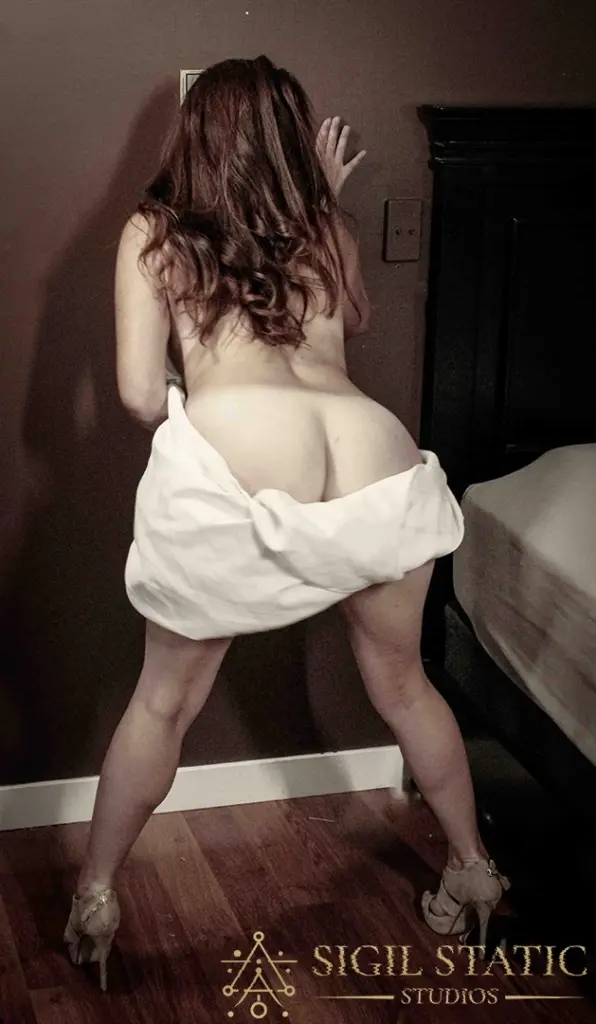
She wanted boudoir photographs.
And she wanted to feel desirable again.
The Problem With Looking
Photography is inherently voyeuristic.
That isn’t necessarily a criticism. It’s simply part of what the medium does. I point a camera at another human being and invite someone else to look at them.
Boudoir makes that transaction particularly difficult to ignore.
The clothing becomes smaller or disappears altogether. The poses become intimate. The resulting photographs deliberately engage with sexuality and desire. Pretending otherwise doesn’t make the work more respectable. It only makes the conversation less honest.
But that raises a question I’ve become increasingly interested in:
When does looking at someone become reducing them?
Discussions about photography, cinema and representation frequently invoke the male gaze. Laura Mulvey introduced the term in film criticism in the 1970s to describe ways cinema positioned women as objects of heterosexual male visual pleasure.
It’s an important idea.
I’m less convinced by what popular conversation has sometimes reduced it to.
Male gaze: bad.
Female gaze: good.
Beyond being an extraordinarily black-and-white way of understanding human relationships, it becomes particularly awkward once we acknowledge that gender itself isn’t a binary, but multi-dimensional. It is shaped by identity, expression, biology, culture and experience.
A woman is perfectly capable of objectifying another woman. A man is perfectly capable of looking at a woman without reducing her to a collection of sexually desirable body parts. Queer relationships further complicate any attempt to determine the ethics of looking simply by identifying who is doing it.
Perhaps gender isn’t the most interesting axis.
Perhaps objectifying and humanizing are.
The Humanizing Gaze
Objectification doesn’t require nudity.
We objectify people constantly without asking them to remove a stitch of clothing. We turn strangers into stereotypes, workers into functions, attractive people into bodies and people we disagree with into caricatures.
The common thread isn’t sexuality.
It’s reduction.
We stop seeing a complicated human being and begin seeing primarily what that person represents or provides to us.
That distinction matters enormously when photographing boudoir.
I don’t think the solution to objectification is pretending sexuality doesn’t exist. Nor do I think there’s anything inherently degrading about wanting to be considered sexually desirable.
For Lynnzee, desire was the entire point.
Trying to sanitize that motivation into something more theoretically respectable would have meant ignoring what she was actually telling me.
She wanted to feel sexy.
So why shouldn’t she?
Twenty Years of Trust
There was another element to this particular session that fundamentally changed its dynamic: Lynnzee trusted me.
We weren’t photographer and model meeting for the first time.
She has known me for more than two decades. She knows my daughter. She knows what I stand for and how seriously I think about consent, agency, boundaries and the responsibility that comes with photographing another person intimately.
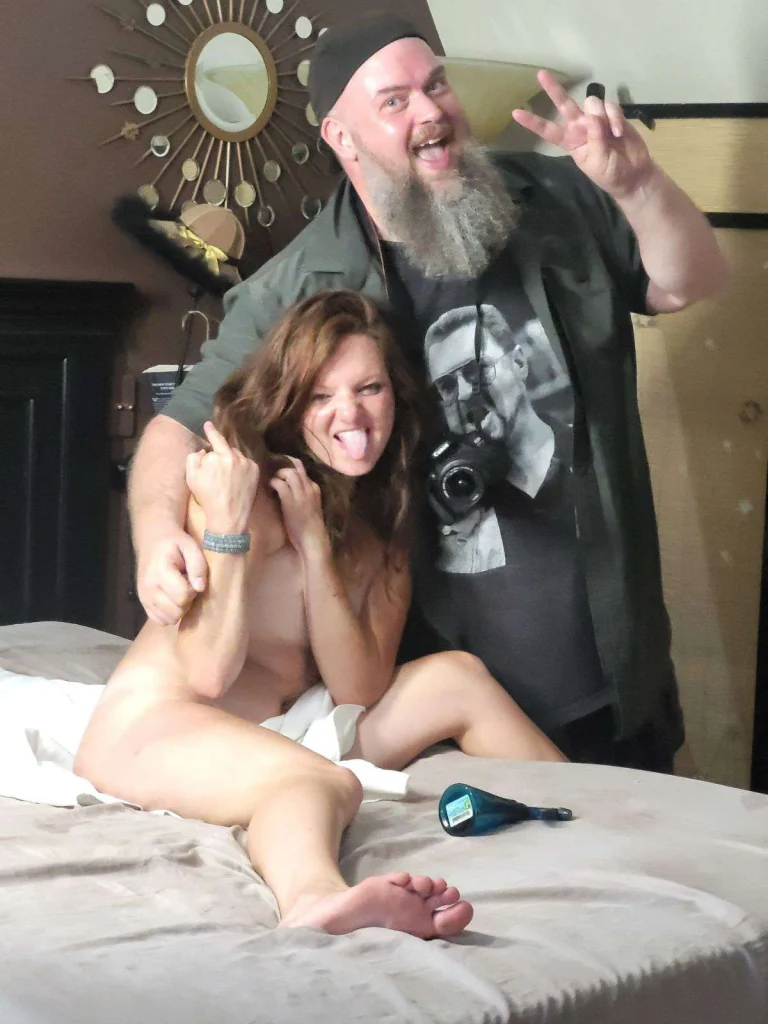
So “baring it all” in front of me wasn’t particularly frightening for her.
In fact, since this session she’s volunteered for future artistic and erotic nude projects we’re beginning to discuss.
That level of trust doesn’t eliminate the power dynamics involved in photography. If anything, I think it increases my responsibility to remain conscious of them.
I’m still holding the camera.
I’m still deciding where to stand, which lens to use, when to press the shutter and which photographs eventually survive the editing process.
But those decisions don’t make me the sole author of how Lynnzee is represented.
She gets a voice too.
Desire Without Reduction
This is where On Being Seen ultimately landed for me.
Lynnzee can be desirable without desirability becoming the sum total of who she is.
The woman in these photographs is also a mother. A farmhand. A worker. A friend. A horse girl. A woman emerging from a marriage. Someone whose children are growing up. Someone figuring out what the next part of her life looks like.
And yes, she’s also a sexual being who wanted photographs that allowed her to inhabit that part of herself.
Those things don’t cancel one another out.
Perhaps that’s where the distinction between an objectifying gaze and a humanizing one becomes useful.
A humanizing gaze doesn’t have to be sexless.
It simply has to leave room for the person being looked at to remain a person.
That doesn’t mean I control how everyone encounters these photographs. Once an image enters the world, viewers bring their own experiences, desires, assumptions and prejudices to it.
The photographer chooses where to point the camera.
The viewer ultimately decides what they see.
But neither of us should pretend the person standing in front of the lens has no authorship of her own.
Being Seen
We’re already talking about photographing Lynnzee again. We’ve discussed concepts involving the black wings, or being involved in a planned series revolving around feminine folk heroines where she would play Lady Godiva, as well as more general glamour and artistic sets. We’d even discussed something a little more erotic in nature.
And perhaps that’s the most meaningful measure of whether this first collaboration worked.
She wants to keep creating.
Lynnzee came to me because she wanted to feel desirable. My responsibility wasn’t to decide whether that desire was sufficiently empowering, appropriately feminist or theoretically pure.
It wasn’t to rescue her from being looked at.
It was to listen when she told me how she wanted to be seen.
The camera was mine.
The body was hers.
And the image belonged somewhere in the conversation between us.